SEO tips for small businesses
Search Engine Optimization (SEO) improves website visibility in search results. Small businesses rely on SEO to reach local audiences and compete with larger brands. Search engines, including Google, Bing, and Yahoo, use algorithms to rank pages based on relevance, authority, and usability. The application of structured SEO strategies increases traffic, leads, and revenue.
According to Google’s Search Central documentation, optimized pages receive higher click-through rates and longer on-site engagement. Small businesses often compete with limited budgets. SEO offers a cost-effective marketing strategy compared to paid ads.
Using SEO tips for small businesses strategically helps owners reach potential customers and increase conversions.
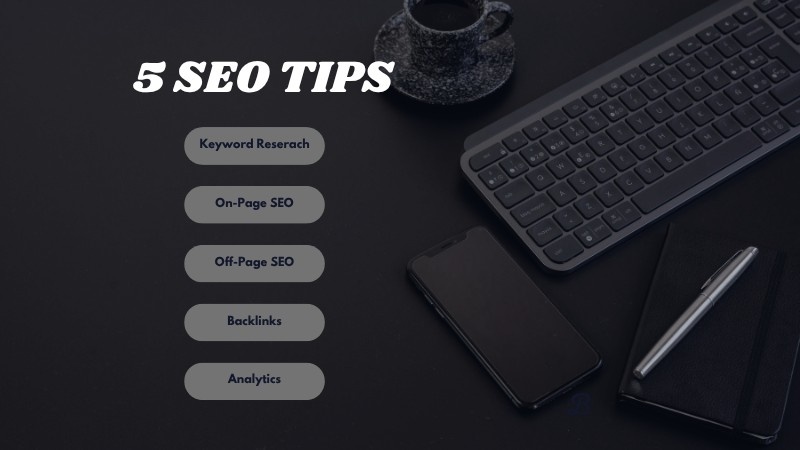
Why SEO Matters for Small Businesses
SEO directly influences online discoverability and revenue generation. According to Google Search Central, optimized websites achieve higher click-through rates and better user engagement.
Local visibility is especially critical for small businesses. Studies by BrightLocal (2024) show that 98% of consumers search online to find local businesses. SEO ensures that a business appears in relevant searches, increasing the chance of attracting customers.
SEO also builds credibility. Sites ranking on the first page of Google are often perceived as more trustworthy. Implementing SEO tips for small businesses ensures consistent visibility and positions the brand as an authority in its niche.
Key Points:
- Drives local and organic traffic.
- Builds authority and trustworthiness.
- Supports long-term cost-effective marketing strategies.
Optimize Website Structure and Speed
Consider various SEO tips for small businesses when analyzing your site’s performance.
Website Architecture:
- Ensure a simple site structure with logical categories and internal links.
- Use breadcrumb navigation to help search engines understand page hierarchy.
- Maintain clean URLs with relevant keywords (e.g. SEO-services-small-business).
Site Speed:
- Compress CSS, JS, and images using Gzip or Brotli.
- Implement browser caching via Cloudflare CDN or WP Rocket.
- Optimize images using WebP or AVIF formats.
Mobile Optimization:
Google’s Mobile-First Indexing prioritizes responsive designs. Use frameworks like Tailwind CSS or Bootstrap for adaptive layouts. Test site performance with Google PageSpeed Insights and GTmetrix.
These SEO tips for small businesses help target high-intent search terms effectively.
Perform Keyword Research and On-Page Optimization
Keyword research determines which phrases users enter when searching for specific products or services. Effective research identifies intent, competition level, and traffic potential.
Conduct Keyword Research
Use professional tools such as Google Keyword Planner, Ahrefs, and SEMrush. Focus on long-tail phrases with high intent, for example, “affordable SEO services for small businesses.” Evaluate keyword metrics like Cost per Click (CPC), search volume, and keyword difficulty.
Optimize On-Page SEO Elements
- Title Tags: Start with the target keyword. Keep titles under 60 characters for full visibility in search results.
- Meta Descriptions: Summarize content in under 160 characters, include target keywords, and encourage clicks.
- Headings (H1–H3): Structure content clearly. Use H1 once per page with the focus keyword, followed by descriptive subheadings.
- URL Structure: Maintain short, readable URLs with relevant words.
- Keyword Placement: Use the primary keyword naturally in the first 100 words. Add secondary keywords across paragraphs.
- Image Optimization: Use descriptive file names and alt text for every image.
Optimizing on-page SEO elements is one of the most important SEO tips for small businesses to improve visibility
Build Local SEO Presence with Google Business Profile
Utilizing effective SEO tips for small businesses will help improve your online presence.
To attract local customers, optimize Google Business Profile (GBP). A complete GBP profile increases visibility in local search results and Google Maps.
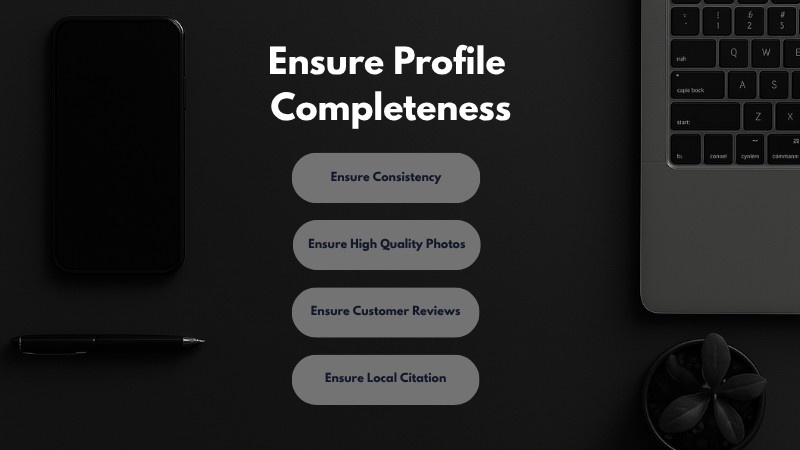
- Ensure Profile Completeness: Add business name, category, phone number, website, and working hours.
- Ensure Consistency: Maintain identical Name, Address, Phone (NAP) across directories.
- Ensure High-Quality Photos: Upload interior, exterior, staff, and product photos. Google confirms photo-rich profiles attract more clicks.
- Ensure Customer Reviews: Request genuine reviews, respond to them, and use keywords in replies.
- Ensure Local Citations: Submit business info to Yelp, Yellow Pages, Bing Places, TripAdvisor.
Maintaining a complete Google Business Profile is one of the most effective SEO tips for small businesses targeting local search traffic.
Create High-Quality, Entity-Rich Content
Content quality defines authority and credibility. Google evaluates pages using the E-E-A-T framework (Experience, Expertise, Authoritativeness, and Trustworthiness).
Develop Valuable Topics
Identify pain points your audience faces. Write content that offers practical solutions—such as “How to choose a reliable SEO company” or “Best SEO practices for local restaurants.” Use factual data, case studies, and references to strengthen credibility.
Maintain Structure and Relevance
Each article should include an introduction, supporting subheadings, and a conclusion. Ensure all sections remain connected to the main topic. Avoid irrelevant transitions.
Optimize for Readability
Use short sentences and active voice. Include bullet points, infographics, or short videos. Provide concise definitions of technical terms like “canonical URL” or “backlink profile.”
Integrate Internal and External Links
Link internal pages for better crawlability. Add external links to credible sources such as HubSpot, Statista, or Google Search Central.
Creating informative and structured content is one of the most practical SEO tips for small businesses to improve search engine authority.
Build Backlinks from Authoritative Sources
Backlinks act as trust signals between websites. Google’s PageRank algorithm evaluates backlinks to determine content reliability.
Acquire Quality Links
Engage in guest posting on relevant websites such as Search Engine Journal, Business.com, or Backlinko. Submit informative press releases via PRWeb or EIN Presswire. Collaborate with local partners and associations for cross-linking.
Conduct Outreach Campaigns
Personalize outreach messages. Offer valuable content in exchange for links rather than requesting them directly. Avoid low-quality directories or automated link schemes.
Utilize Broken Link Building
Identify broken external links using Ahrefs or SEMrush. Contact the site owners with replacement suggestions that link back to your content.
Track and Analyze Link Growth
Monitor backlinks using Google Search Console. Measure link relevance and authority metrics. Remove toxic links through the disavow tool if necessary.
Backlinko’s 2024 link study found that pages in the top three Google positions have 3.8 times more backlinks than lower-ranked pages. Acquiring authoritative backlinks is an essential SEO tip for small businesses seeking to increase domain authority and organic traffic.
Conclusion
SEO remains an essential strategy for small businesses seeking visibility and growth. A well-optimized website, supported by keyword targeting, local SEO, content quality, and authoritative backlinks, builds long-term performance and trust.
Each tip in this guide directly aligns with Google’s best practices and recognized industry standards. Consistent application improves ranking potential, increases organic traffic, and helps small businesses compete effectively in digital markets.
Applying these SEO tips for small businesses ensures better search engine rankings and increased local customer engagement